
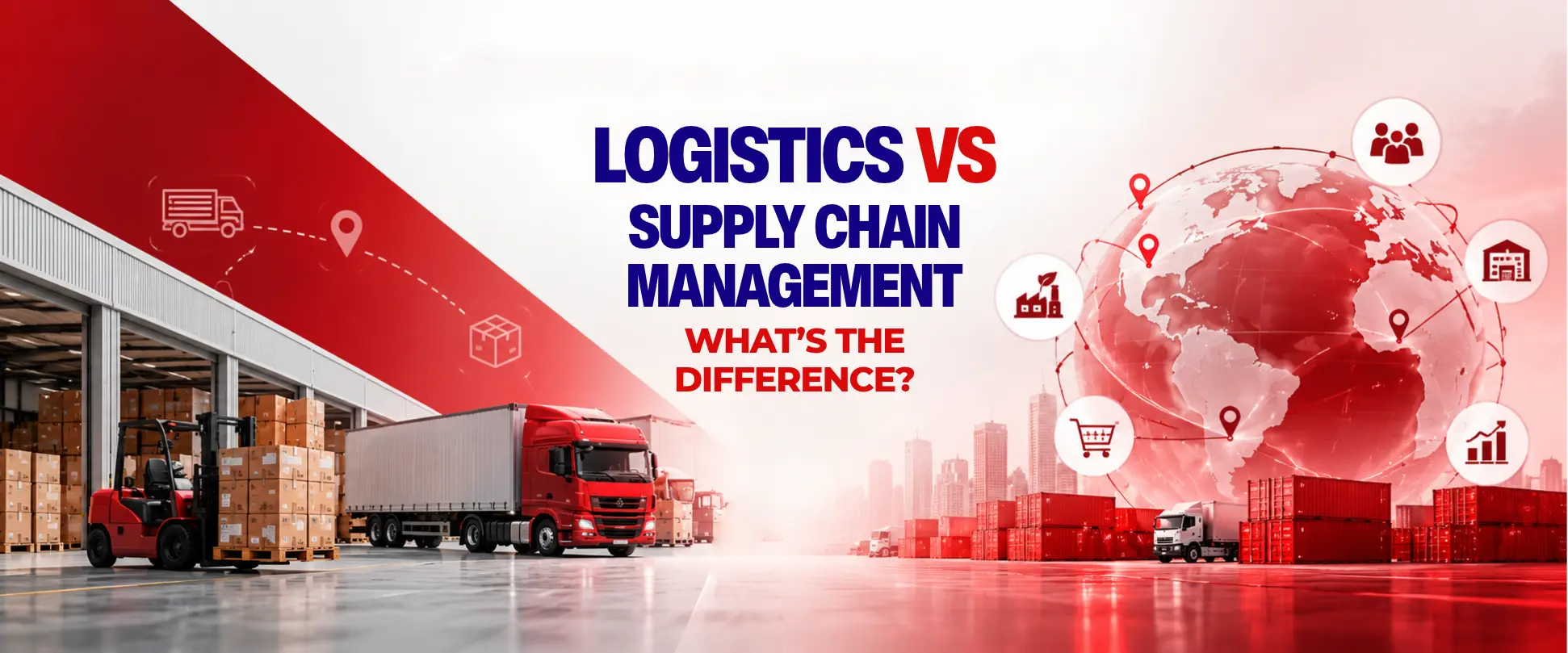
Students often use “logistics” and “supply chain management” as if they mean the same thing. They overlap, but they’re not identical, and the difference matters when you choose a course and a career. This guide explains both in simple terms and shows which courses and jobs fit each path.
Table of Contents
What Is Logistics?
Logistics is the part of the process that moves and stores goods. It deals with getting the right product to the right place, at the right time and at the right cost.
It covers:
- Transportation (road, rail, air and sea)
- Warehousing and storage
- Inventory handling
- Packaging and order fulfilment
- Delivery, including last-mile delivery
Think of logistics as the movement and storage side of the business.
What Is Supply Chain Management?
Supply chain management looks at the whole journey, from sourcing raw materials to delivering the finished product to the customer. It plans and coordinates everything involved, including suppliers, manufacturing, logistics and customer demand.
It covers:
- Sourcing and procurement
- Supplier and vendor relationships
- Production planning
- Logistics and distribution
- Demand forecasting
- Returns and reverse logistics
- Cost, risk and performance management
Think of supply chain management as the planning and coordination of the entire network. Logistics is one important part of it.
Logistics vs Supply Chain Management: Key Differences
| Factor | Logistics | Supply Chain Management |
|---|---|---|
| Scope | Movement and storage of goods | The entire chain from supplier to customer |
| Focus | Operations and delivery | Planning, strategy and coordination |
| Includes | Transport, warehousing, delivery | Sourcing, production, logistics, demand planning, risk |
| Level | Often operational | Often strategic as well as operational |
| Typical question | How do we get this there on time? | How do we run the whole network efficiently? |
Courses for Each Path
Logistics-focused courses
- Diploma in Logistics and Warehouse Management
- B.Com in Logistics and Supply Chain (or similar specialisations)
- BBA in Logistics and Transport Management
- Freight forwarding and customs training
- Certificates in warehousing, shipping or air cargo
Supply chain-focused courses
- BBA in Supply Chain Management
- B.Sc or BBA in Operations and Supply Chain
- MBA in Logistics and Supply Chain Management
- PG diplomas in Supply Chain Management and Analytics
- Professional certifications such as those from CILT, ASCM (CSCP, CPIM) and similar bodies
Many programmes combine both, titled “Logistics and Supply Chain Management”. Check the syllabus to see how much of each topic is covered.
Career Options
Logistics-focused roles
- Logistics executive or coordinator
- Warehouse supervisor or manager
- Freight forwarding executive
- Transport planner
- Last-mile delivery manager
- Customs and shipping documentation executive
Supply chain-focused roles
- Supply chain analyst
- Procurement or sourcing executive
- Demand or inventory planner
- Operations manager
- Supplier relationship manager
- Supply chain manager or consultant (with experience)
Both fields offer jobs in manufacturing, retail, e-commerce, shipping, aviation, healthcare, FMCG and more.
How to Choose
Choose a logistics-focused course if:
- You like hands-on operations, such as transport, warehouses and deliveries
- You want to start working quickly in a specific role
- You enjoy coordinating people, vehicles and schedules
Choose a supply chain management course if:
- You enjoy planning, data and strategy
- You want a broader business view and leadership options
- You’re thinking of a bachelor’s followed by an MBA
Not sure? Choose a combined programme. You’ll learn both, and you can specialise later.
What to Check Before Joining a Course
- Is the degree awarded by a recognised university?
- Does the syllabus include real tools, such as inventory software, ERP systems and analytics?
- Are there internships, warehouse or port visits and industry projects?
- What do past students do after the course? Ask for real placement details.
- Are there certification options you can add?
Final Thoughts
Logistics moves the goods. Supply chain management plans the entire journey. Both are growing fields, and you don’t have to pick forever: many professionals begin in logistics and move into supply chain management as they gain experience. Choose the course that matches your interests, and look closely at the syllabus, training and industry exposure.